Eight Places, Eight Reasons: Where in the World to Do a Retreat
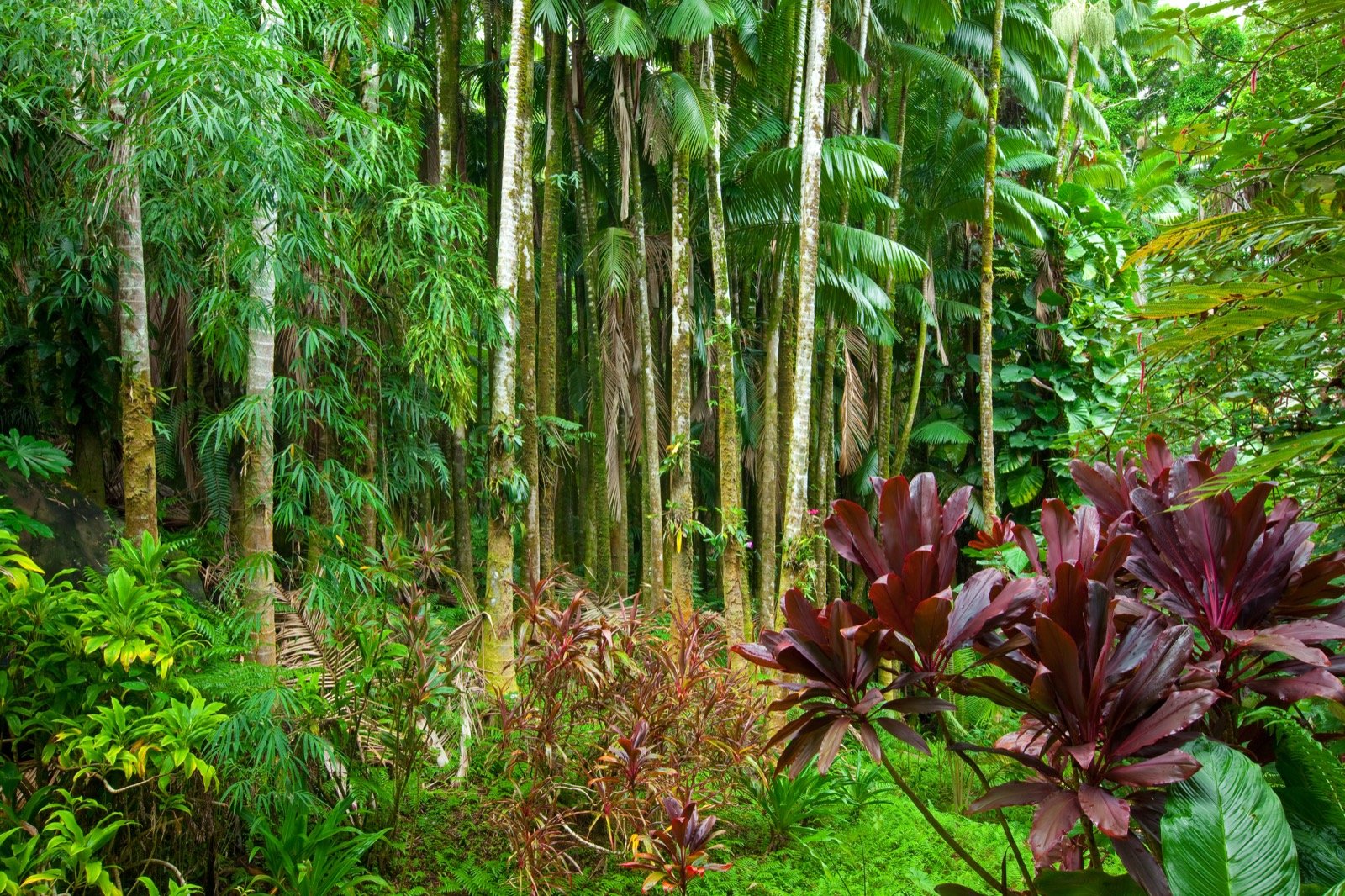
When people ask how we pick where to run a retreat, they usually expect a list of nice hotels. That's not how any of this works. We pick the place first, and we pick it because the land itself does part of the job. A desert makes you quiet whether you like it or not. A jungle slows your breathing. A mountain makes your problems smaller by simply standing there, older than all of them. The environment isn't a backdrop to the work. In the best places, it is the work.
Here are the eight we run, and what each one does to the people who go. This isn't a bucket list. It's closer to a map of the different ways a person can come apart and get put back together — and which ground suits which job. Because they're not interchangeable. That's the part almost everyone gets wrong.
The Sacred Valley, Peru — for the ones who lost the thread
The valley runs along the Urubamba river between Cusco and Machu Picchu, framed by peaks the Inca treated as living beings. Apus, they called them — mountain spirits, and you still see people leaving offerings at the passes. The sites are built to catch the solstice light with a precision nobody has fully explained. Stand at Machu Picchu at dawn, before the buses, cloud moving through the peaks below you, and your sense of your own scale quietly rearranges itself. The plant medicine traditions here — ayahuasca, coca — are living practice, carried by families across generations, not a tourist add-on. We run the Peru retreat for people who've achieved everything they set out to and can't feel a single bit of it. The altitude and the silence tend to shake something loose. → Retreat: Activation & Purpose, Sacred Valley.
Before Machu Picchu you spend days lower down, around Pisac and Ollantaytambo, letting your body adjust — the altitude is real and it humbles everyone, coca tea and slow walking included. That acclimatising is part of the point, not a delay before it. You can't hurry this place and it won't let you try. By the time you reach the ridge, you've already dropped to its speed.
Putumayo, Colombia — for the ones carrying something old
Down near the Amazon headwaters, the Colombian jungle is thicker and quieter than anything a beach traveller is ready for. This is the country of the taitas — indigenous healers who work with yagé, the Amazonian medicine, in ceremonies that run all night. It isn't a light experience and we don't pretend it is. Putumayo is for ancestral work: the grief and the patterns that got handed to you before you had any say in them. People come here to meet what they inherited. The jungle holds a particular kind of dark — genuinely lightless, loud with insects and water — and something about that dark brings the buried stuff up to the surface. It's the most intense place we work. It's also the one people are most changed by. → Retreat: Ancestral Healing, Putumayo.
A ceremony night here has a shape: a simple diet in the days before, then the taita, the icaros — the medicine songs — that carry on for hours, and a long dark you sit inside rather than escape. Nobody's performing wellness. It's old, careful work, led by people who've carried it their whole lives. You come out at first light wrung out and, more often than not, strangely clear.
Giza and Luxor, Egypt — for the ones asking who they are
Four and a half thousand years old. Aligned to the cardinal directions to within a fraction of a degree, and we're still arguing about how they managed it. Whatever you make of the theories, the Great Pyramid and the temples down the Nile at Karnak and Luxor carry a weight you feel in the body before the mind finds a word for it. The King's Chamber does the same thing a cenote does — a stillness that presses in from every side. Egypt is the identity retreat. Who are you once you strip away the roles and the story you tell about yourself? There's something about standing next to a monument that has outlasted a hundred generations that makes the question feel urgent, and then, strangely, light. → Retreat: Identity & Consciousness, Giza & Luxor.
There's a morning on the Nile in a felucca, the same slow sail that's moved people up this river for thousands of years, and an afternoon in the hypostyle hall at Karnak where the columns stand so vast that a whisper seems to hang in the air. Egypt overwhelms you with time. After a few days of it, the deadlines waiting back home start to look very small, and that shift in proportion is most of the work.
The Sahara, Morocco — for the ones who can't hear themselves think
Past Merzouga the dunes of Erg Chebbi rise out of flat nothing and roll to the horizon, and the first thing that hits you is the silence. Real silence, the kind with weight, because there is nothing out there to make a sound. No traffic. No birds. No hum. At night the stars come down close enough to touch and the temperature falls off a cliff. People have gone to the desert for vision as long as there have been people — every desert religion started with someone alone in one. The Morocco retreat is built around silence and vision: long stretches with no talking, no input, nothing to react to, until the noise in your own head finally drops enough that you can hear what's underneath it. Most people are frightened of it for about a day, and never forget it after. → Retreat: Silence & Vision, Sahara.
You go in the old way — a short ride by camel over the first dunes at dusk, Berber guides who read the sand the way other people read a street, a camp with nothing in it but firelight and stars. The cold at three in the morning is part of the medicine. So is the sunrise, when the dunes turn from grey to gold in about ten minutes and nobody in the group says a word.
Iceland — for the ones who need to feel small on purpose
Iceland is the planet with its skin off. Volcanoes, glaciers, black sand, waterfalls the size of buildings, geothermal water steaming straight out of the ground. Fire and ice close enough that you can stand between them. There's no gentle way to describe the scale — it's overwhelming, and that's exactly the point. When a landscape is that raw and that indifferent to you, your problems get right-sized fast. The elemental retreat here uses cold water, heat, and the sheer physical force of the place to knock you out of your head and back into your body. You climb out of a glacial river into a hot spring and for one moment you are completely present, because there is nowhere else to be and nothing left to think about. → Retreat: Elemental Power, Iceland.
Depending on the season it's either endless light or a deep, honest dark with the aurora overhead — both do their own work on a nervous system. You'll stand under a waterfall like Skógafoss and feel it in your chest before you hear it. The country doesn't do subtle. It takes you by the collar and puts you back in your body, which is exactly why it works when gentler places don't.
The Alps, Austria — for the ones whose life has lost its shape
Not everyone needs to be broken open. Some people need the opposite — structure, edges, a container. The Austrian Alps give you that. Cold, clean, ordered. The mountains impose a discipline just by being there: you rise early because the light demands it, you move because the terrain asks for it, you sleep hard because the altitude and the cold earn it for you. This is the grounding retreat, and it's the most practical one we run. It's for people whose lives have drifted into chaos — no routine, no boundaries, running on pure reaction — who need to rebuild a spine to their days. Mountains are good teachers for that. They don't rush, and they don't bend. → Retreat: Grounding & Structure, Alps.
The days here have a clean rhythm: cold mornings, real effort on the trails, thermal springs in the afternoon to undo the ache, early nights. Nothing dramatic, nothing mystical. Just a week of doing things properly and in order — which, for a certain kind of scattered, frazzled person, is the precise medicine they've never managed to give themselves at home.
Costa Rica — for the ones running on empty
The Nicoya peninsula is one of a handful of places on earth where people routinely live past a hundred in good health — a genuine Blue Zone, studied for that exact reason. Whatever they're doing there works, and it isn't a supplement or a hack. It's a way of living: unhurried, connected, outdoors, physically active into old age, food grown close to the plate. Pura vida isn't a fridge magnet, it's an operating system. We run the vitality retreat here for people who've burned themselves all the way down and need to relearn what sustainable energy actually feels like — not the caffeinated version, the real one. Waterfalls, jungle, the Pacific, and a working template for a longer, better life that you can carry home in your body. → Retreat: Vitality & Longevity, Costa Rica.
Up close the Nicoya habits are almost boringly simple — beans and squash and corn, strong family ties, a faith that gives the week a shape, bodies that keep moving into their nineties, water that happens to carry the right minerals. No biohacking, no cold plunges timed to an app. Just a life built at a human pace. We spend the week borrowing that pace, with the jungle and a few good waterfalls thrown in for good measure.
Ibiza, Spain — for the ones who stopped making things
Forget the clubs. That's one small, loud corner of the island and the least interesting one. The Ibiza almost nobody writes about is quiet — pine forest, hidden coves, and Es Vedrà, the sheer rock off the southwest coast that sailors have told stories about for centuries. The island has pulled artists and misfits and people running from something for decades, and it does something particular to creativity. Things loosen here. This is the creative rebirth retreat, for people who used to make things — music, art, ideas, a life with some colour in it — and let all of it die quietly under responsibility. It's the gentlest place we run, and the one people leave feeling most like themselves. Sometimes the work isn't breaking down. Sometimes it's remembering you used to be alive. → Retreat: Creative Rebirth, Ibiza.
The lore says Es Vedrà is one of the most magnetic spots on the planet. The geology is more modest than the legend, but stand in front of it at sunset and you understand how the story got started. The real Ibiza is up north anyway — San Juan, the hill villages, the drum circle at Benirràs as the sun drops into the sea. Quiet, a little strange, full of people who came for a week thirty years ago and never quite left.
How we actually do this
One thing runs through all eight. Wherever there's a living tradition — the taitas in Putumayo, the plant medicine in Peru, ceremony in the desert — we work with the people who hold it, on their terms, with permission. Not a facilitator who took a weekend course performing someone else's culture for paying guests. That line matters more than any view. It's slower to arrange and it costs more, and it's the only version we'll put our name on. If a place can't be visited with respect, we don't run there. Simple as that.
Why the place is the point
Eight destinations, eight different jobs. That's the thing people miss about retreats — they treat them as interchangeable, a nice week wherever there's a beach and a yoga mat. But someone who's lost the thread needs the Sacred Valley, not a spa. Someone carrying inherited grief needs the weight of the Putumayo jungle, not a mountain view. The place is a tool. The wrong tool does nothing, however pretty the photos.
So when people ask which one they should do, my answer is a question back: what actually needs to happen? Not where do you want to go — what needs to shift. Get that right and the place picks itself. Get it wrong and you'll have a lovely holiday and change nothing, which is fine, but it isn't what we're here for.