Does the Science Actually Back Up Wellness Retreats?
Ask most people whether a wellness retreat "works" and you'll get one of two answers. Either it's the best thing they ever did for themselves, or it's an expensive way to feel good for a week and then slide right back into the old life. Both can be true. The interesting question is why, and whether there's anything underneath the glow that holds up when you look at it properly.
So let's look at it properly. Not with brochure language. With what we actually know about the body under stress, and what a week in the right conditions does to it.
Your stress system runs on a clock, and it's stuck
The body has a stress response that's supposed to switch on, do its job, and switch off. Cortisol rises in the morning to get you moving, drops through the day. Heart rate speeds up when there's a threat, settles when it passes. That's the design. The problem is that modern life keeps the switch half-on all the time. Emails at 11pm. A calendar with no gaps. A phone that buzzes in a different room and your shoulders still climb toward your ears.
When that goes on for years, the system loses its rhythm. Cortisol flattens out instead of cycling. Sleep gets shallow. Digestion, mood, hormones — all of it runs off the same regulatory machinery, and all of it starts to drift. Researchers who study this have a decent handle on the mechanism. What they're less sure about is how to reset it, because you can't reset it inside the environment that broke it.
What actually changes in a week away
Take someone out of that environment for six days and a few things happen that you can measure. Sleep is usually the first. Without screens at night, without a 6:30 alarm, with real physical tiredness from moving and being outside, people sleep longer and deeper by about the third night. That alone shifts cortisol patterns, because sleep and the stress axis are wired together.
Then there's the nervous system side. Slow breathing — the kind you do in a breathwork session, not the kind you do reading bad news — pushes the body toward the parasympathetic state, the one where repair happens. You can watch it on heart rate variability, which tends to climb over a few days of this. Higher variability is one of the more reliable signals that the recovery system is coming back online.
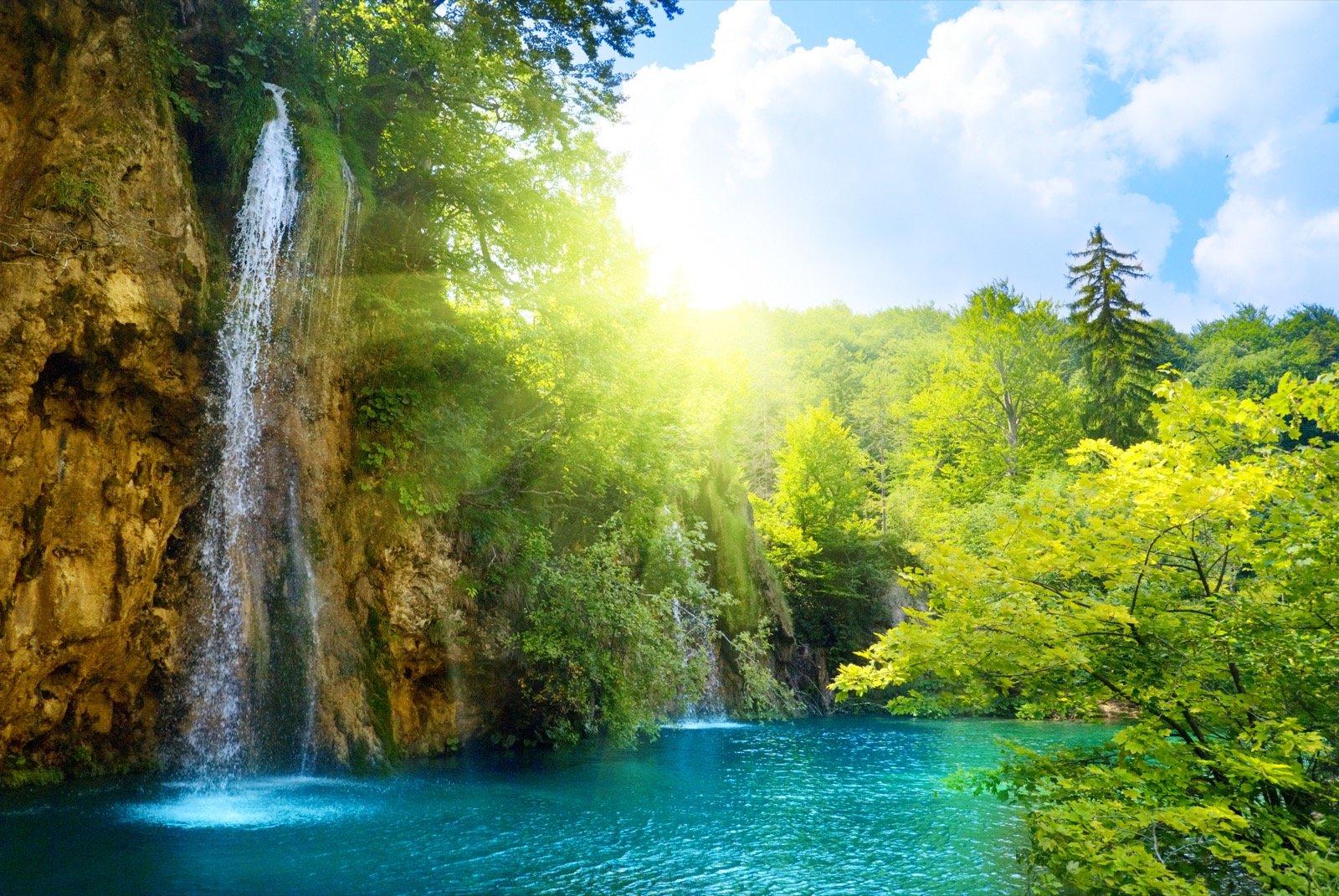
And the environment does its own work. There's a body of Japanese research on shinrin-yoku, forest bathing, that found lower cortisol and lower blood pressure after time under a canopy, compared to the same time in a city. The effect is modest and it's real. Nobody's claiming the trees heal you. But quiet, green, humid air with nothing demanding your attention is a different input than a commute, and the body reads the difference.
The part the studies struggle with
Here's where I'll be honest, because the field is full of people who won't be. The strongest evidence for retreats is short-term. Stress markers drop, mood lifts, sleep improves — over days and a few weeks. What's harder to prove is the six-month effect. A lot of the research has small samples, no control group, and people who were already motivated enough to book and pay. That's not nothing, but it's not a clinical trial either.
The mind-body medicine work that does hold up longer — Jon Kabat-Zinn's mindfulness program out of the University of Massachusetts, the stress-reduction research it spawned — has one thing in common. It teaches a skill you keep using afterward. That's the difference between a week that fades and a week that sticks. Not the location. The tools you leave with, and whether you actually use them.
How to tell a real reset from an expensive nap
There's a fast way to tell whether a retreat is built on the science or just borrowing its vocabulary. Look at the last day. If it ends with a group photo and a goodbye, you got a holiday. If it ends with a specific plan — how you'll sleep, what you'll eat, the two breathing practices you'll actually keep using — someone understood that the reset is only half the job. The other half is retention, and retention is unglamorous. It's a checklist, not a sunset.
The other tell is whether anyone measured anything, or even asked what you walked in carrying. Not because you need a lab bolted to a jungle, but because a program that tracks how you arrive and how you leave is a program that has actually thought about the mechanism. Chronic stress drives inflammation, too — the markers like IL-6 and C-reactive protein that creep up under years of pressure. A week of real recovery nudges those down. You won't feel your inflammation drop the way you feel your sleep come back. But it's the same system standing down, and it's part of why people describe getting home in less pain than they left with, without quite being able to say why.
So does it work?
For the week itself, yes, and the mechanism isn't mysterious. Pull someone out of chronic stress, give the nervous system real conditions to recover, add sleep and movement and quiet, and the body responds the way it's built to. You can feel it and you can measure it.
Whether it lasts is up to what happens next. A retreat that sends you home with a better week and nothing else is a holiday with candles. A retreat that changes how you breathe, how you sleep, what you eat, how you handle the next hard month — that's the one worth the money. We build ours around the second kind, which is why the last day is about what you take with you, not a group photo. The science supports the reset. Keeping it is your work, and we'd rather tell you that up front.